


Author: VASL Inc.
Published: May 11, 2026
TL;DR:
What Is Construction Bookkeeping for Contractors?
Construction bookkeeping for contractors is a specialized accounting process designed for the unique demands of the building industry. It goes far beyond standard small business bookkeeping by incorporating accurate job costing, retainage tracking, percentage-of-completion revenue recognition, and monthly financial closes. You get clear project-level profitability insights, clean bank reconciliations, and lender-ready financial statements that support funding, bidding, and sustainable growth.
Unlike generic bookkeeping, construction bookkeeping delivers the visibility contractors need to move from being just busy to confident, data-driven decision-making, including the ability to confidently pursue larger commercial opportunities.
Why Do Most Construction Companies Struggle with Messy Books?
Disorganized financial records hide true project profitability, create cash-flow surprises, and block access to bank loans or investor funding. Many contractors remain “always busy but never truly profitable” because inaccurate or incomplete records prevent clear decision-making and scalable growth. Cfma
Common Challenges Shared by Contractors
Construction professionals frequently discuss the real-world impact of disorganized financial records in industry forums and association resources. Poor bookkeeping creates daily operational headaches and quietly restricts business growth.
Key issues commonly reported include:
- Inaccurate or incomplete job costing making it difficult to determine true project profitability by phase or trade.
- Unreconciled accounts and scattered expenses leading to duplicated transactions and unreliable financial reports.
- Cash flow surprises even on busy job schedules, due to poor tracking of retainage, progress billing, and WIP schedules.
- Challenges during bidding and bonding banks and sureties demand clear statements, yet messy records prevent confident submissions for larger projects.
- Project costing that fails to properly allocate direct costs (labor, materials, equipment) and indirect costs (overhead), leading to unreliable profit margins and poor estimating accuracy on future bids.
According to the Construction Financial Management Association (CFMA), effective cash flow management is critical in construction, yet many contractors face ongoing pressure from retainage withholding and billing misalignment, which can strain working capital and limit growth opportunities.
Real Benefits of Proper Contractor Financial Cleanup
Contractors who implement structured contractor financial cleanup and adopt specialized construction bookkeeping for contractors commonly report measurable improvements, including:
- Better project visibility quickly revealing which jobs and trades are truly profitable versus those quietly eroding margins.
- Improved bidding accuracy enabling more competitive yet sustainable bids on larger commercial opportunities.
- Higher win rates and revenue growth supported by clean, bank-ready financials that strengthen loan approvals, equipment financing, and team expansion.
- Margin gains often in the range of several points by identifying and correcting unprofitable work early.
With our bookkeeping and financial services for contractors, many businesses owner we worked with successfully moved beyond residential work into commercial projects. This transition frequently led to higher average project values, stronger profit margins, and more predictable revenue growth.
How Does Poor Bookkeeping Block Growth and Funding for Contractors?
When financial records are messy, banks and sureties hesitate to approve loans or increase bonding capacity. They look for clarity in financial statements, proper WIP (Work in Progress) schedules, and consistent job costing. Cfma
Without these, contractors face:
- Difficulty bidding on larger projects
- Delays in hiring key talent
- Restrictions on equipment purchases
- Ongoing cash-flow uncertainty
Clean, professional construction bookkeeping removes these barriers and positions your business for faster approvals and stronger terms.
Construction Bookkeeping: Step-by-Step Cleanup Process
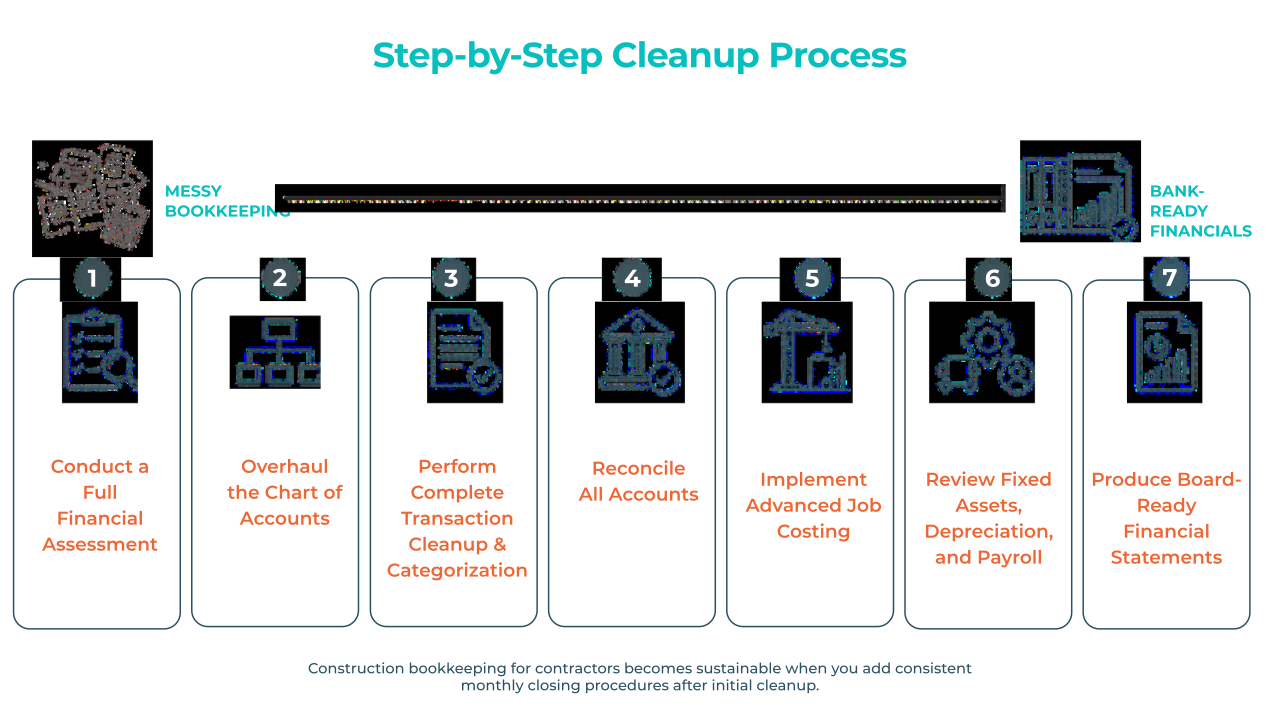
Here is the proven, structured process we use to transform messy books into reliable financial systems:
1- Conduct a Full Financial Assessment
Gather all bank statements, invoices, job files, and existing records to establish a reliable baseline. It prevents garbage-in-garbage-out and creates an accurate starting point.
2- Overhaul the Chart of Accounts
Build a construction-specific structure that supports job phases, retainage, and percentage-of-completion methods. It enables true project-level profitability tracking.
3- Perform Complete Transaction Cleanup and Categorization
Reclassify every expense and allocate costs correctly to jobs. It uncovers missed deductions and eliminates errors that distort margins.
4- Reconcile All Accounts
Align bank, credit card, loan, and retainage balances to the penny. It eliminates surprises and builds lender trust.
5- Implement Advanced Job Costing
Assign every direct cost (labor, materials, subcontractors) to the correct project and phase. It reveals which jobs and trades are actually profitable.
6- Review Fixed Assets, Depreciation, and Payroll
Update equipment records, mileage, and certified payroll compliance. It ensures tax accuracy and regulatory adherence.
7- Produce Board-Ready Financial Statements
Generate professional P&L, Balance Sheet, Cash Flow, and job profitability reports. It makes your business funding-ready in minutes. Construction bookkeeping for contractors becomes sustainable when you add consistent monthly closing procedures after initial cleanup.
What Does a Monthly Closing System Look Like for Construction Bookkeeping?
We recommend a repeatable monthly checklist that includes:
- Bank and credit card reconciliation
- Job cost allocatio
- WIP schedule update
- A/R aging review
- Period close and reporting
This system maintains accuracy and delivers fresh, actionable insights every month, instead of year-end panic.
How to Achieve Financial Clarity with a Cash Flow Dashboard?
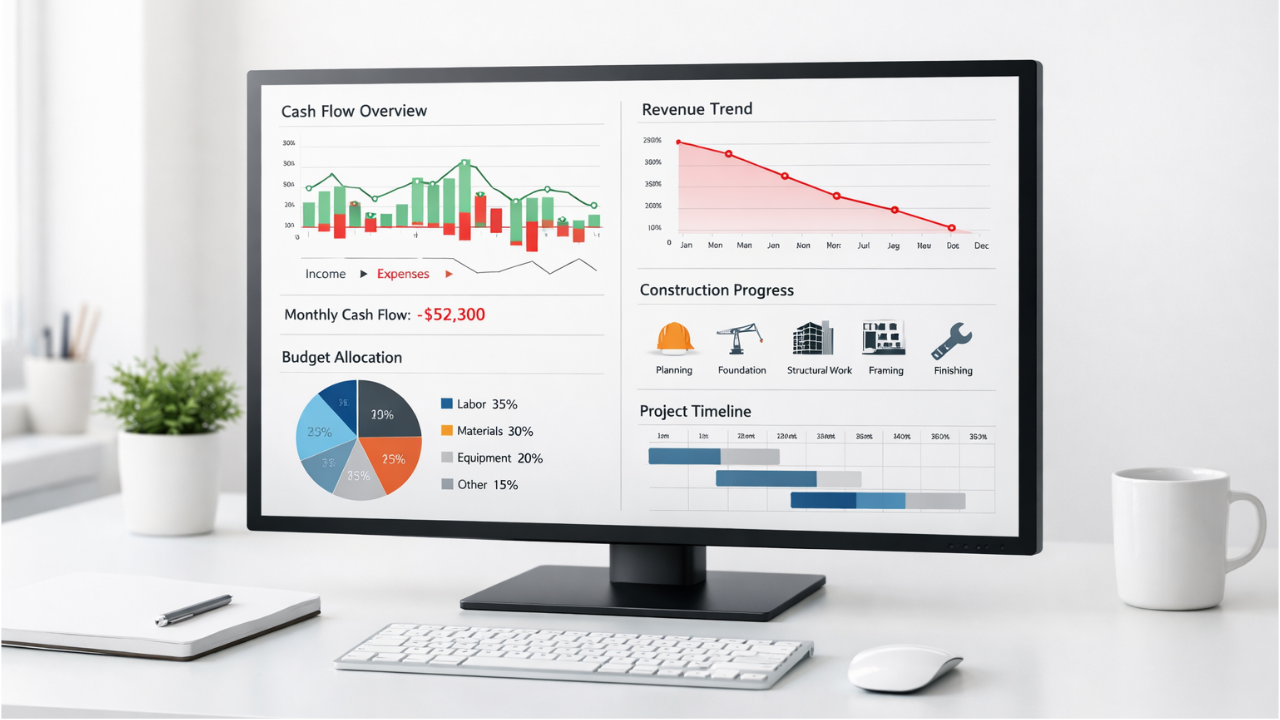
Once your books are clean, a construction-specific cash flow visibility dashboard provides real-time views of:
- Bank balance
- 30/60/90-day cash projection
- Gross margins by jo
- A/R aging
- Cost variances
This level of visibility empowers confident bidding and early detection of unprofitable work.
Messy Books vs. Professional Construction Bookkeeping for Contractors
|
Criteria |
Messy / Disorganized Books |
Professional Construction Bookkeeping for Contractors |
|
Financial Visibility |
Hidden or inaccurate project margins |
Real-time job profitability and cash flow |
|
Funding & Loan Approval |
Frequent denials due to unclear statements |
Faster approvals with board-ready reports |
|
Decision-Making |
Guesswork and cash-flow surprises |
Data-driven bidding and expansion decisions |
|
Profitability Impact |
Lost revenue from poor costing (up to 15%) |
Improved margins (often +3–8 points) |
|
Time Spent on Finance |
Owner spends hours weekly on admin |
Owner focuses on growth and operations |
Common Questions About Construction Bookkeeping for Contractors
How long does it take to clean up messy construction books?
Most SMB contractors see a complete cleanup in 4–8 weeks, depending on the volume of historical transactions.
Can construction bookkeeping for contractors help with bank funding?
Yes. Clean statements with proper job costing and WIP schedules significantly improve approval chances and terms with lenders and sureties.
Is construction bookkeeping different from regular bookkeeping?
Absolutely. It requires specialized handling of retainage, percentage-of-completion, job costing, and change orders, areas that standard bookkeepers often mishandle.
What results can subcontractors expect?
Subcontractors typically gain better retainage tracking, faster collections (lower DSO), and improved cash flow for growth without relying on personal funding.
How much can proper bookkeeping improve profitability?
Many clients report 3–8 point margin gains by identifying and fixing unprofitable jobs early.
Why Accurate Construction Job Costing Matters for Scaling?
In contractor forums and LinkedIn discussions, many owners note that without solid construction job costing, they continue bidding the same way they always have, often leaving money on the table or winning unprofitable work. Proper job costing reveals real costs per phase, helping refine future estimates and submit bids that are competitive yet profitable.
This clarity is especially valuable when moving from residential to commercial projects. Residential work often involves tighter margins and faster turnover, while commercial jobs bring larger scale, retainage challenges, and stricter bonding requirements. Clean financial records and reliable data give contractors the evidence lenders and general contractors want to see, making it easier to qualify for bigger opportunities and increase bid win rates. Esub
Why Partner with Us?
Our team specializes in handling the heavy lifting: cleanup, monthly closes, accurate job costing, and cash flow dashboards, all while working directly in your software (QuickBooks, Xero, Sage, and more).
Because we focus exclusively on U.S. construction trades, there’s no learning curve on your end. You get cost-effective, scalable support that grows or shrinks with your workload. Many contractors start with us to complement their in-house team and quickly achieve cleaner records, stronger margins, and faster funding approvals.
Construction bookkeeping with us means less stress, better numbers, and more time to do what you do best, build and grow your business. Whether you’re a residential specialist looking to expand into commercial work or a subcontractor aiming to boost revenue through smarter bidding, having bank-ready financials removes common roadblocks and supports sustainable profit growth.
Common Questions We Get From Business Owners
How do you ensure confidentiality?
We use encryption, secure access controls, NDAs, regular audits, secure channels, and specially trained staff. Your financial data stays fully protected with industry-leading security measures.
What is your pricing?
Our pricing is customized and competitive, built around your specific volume, complexity, and needs. You only pay for the exact support your construction business requires.
Can you share references?
Yes, we provide case studies and client testimonials. Schedule a call to see real results from contractors like you. Proven results are available and easy to verify.
What are your contract terms?
We offer scalable support that grows or shrinks with your workload. You stay in control with terms that adapt to your business.
Do you provide customized solutions?
Yes, every engagement is 100% tailored to your goals and specific challenges. Solutions are built around your unique construction operations.
Can you support multi-location businesses?
Absolutely. We deliver consolidated reporting and centralized oversight across all locations. You get one clear financial picture no matter how many job sites or offices you manage.
Do you provide audit support?
Yes, we handle full audit preparation and coordinate directly with your auditors. Audit season becomes far less stressful with expert support on your side.
What if we’re not satisfied?
We offer flexible terms and fast issue resolution to make things right quickly.

Key Takeaway
Construction bookkeeping for contractors is the practical bridge from constant busyness to real, sustainable profitability for construction companies like yours.
Are you ready to move from messy books to bank-ready financials?
Contact us today for a free, no-obligation discovery call. Let us show you how we can help you unlock confident growth and easier funding for your business.