

Top Bookkeeping Tools for SMBs in 2025
Choosing the right bookkeeping tools can make or break your small business’s financial efficiency. In 2025, with more tools on the market than ever, it’s not just about finding something that works; it’s about finding something that works for your business needs. Whether you need simple invoicing or detailed financial reporting, the right tool can help streamline operations, reduce errors, and free up your time.
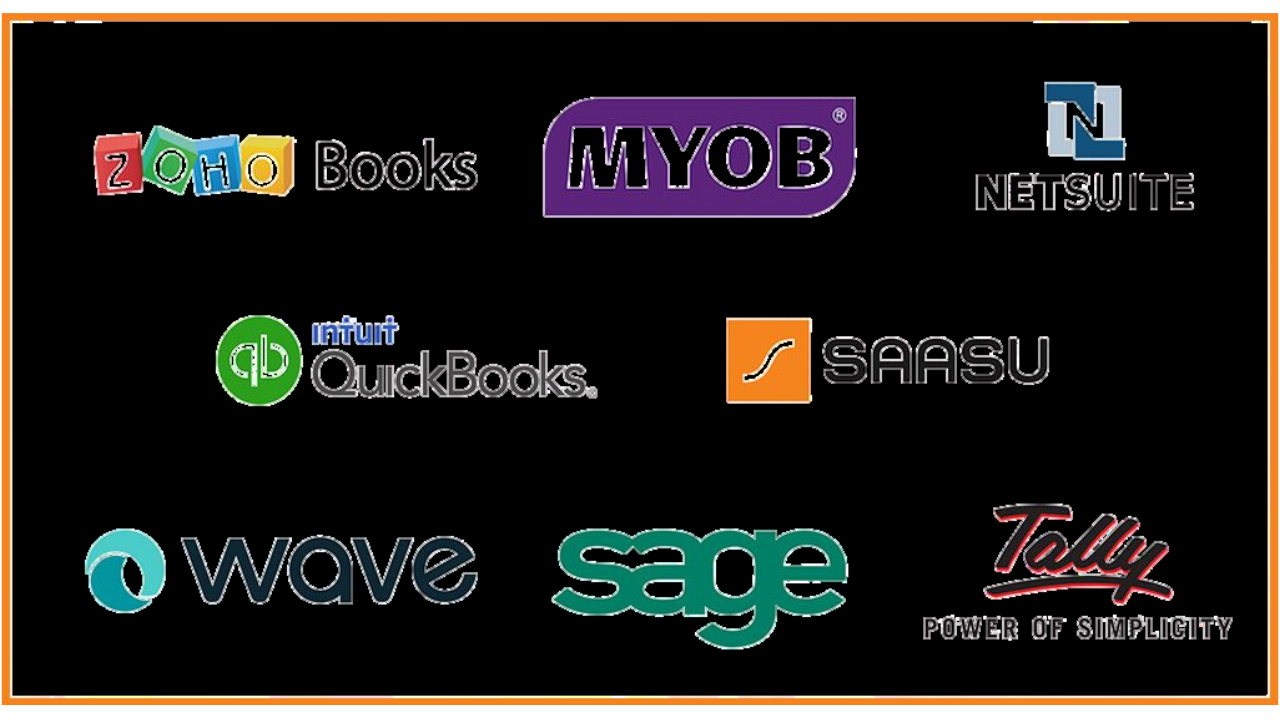
In this blog, we’ve rounded up the top active bookkeeping platforms for SMBs in 2025 and broken down what makes each one stand out.
Why Choosing the Right Bookkeeping Tools Matters
The wrong bookkeeping tools can create more headaches than solutions. You could spend hours troubleshooting, syncing with your bank, or dealing with mismatched reports. Worse, you could miss insights that could improve cash flow or alert you to spending issues early.
Choosing the right tool tailored to your size, industry, and workflow needs can mean
Faster monthly closes
Cleaner reconciliations
Easier AR/AP management
Smarter, data-driven decisions
Top Bookkeeping Tools Picks for 2025
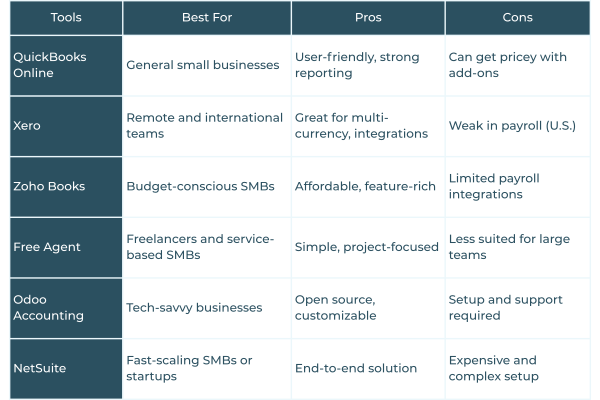
Breakdown of Each Tool

QuickBooks Online
It’s like the tool most accountants already speak fluently, which makes onboarding smoother. It has almost every feature an SMB could want, however, the downside is that once you start adding payroll, inventory and advanced reporting, costs creep up fast.
Xero
Xero feels modern like it was built for businesses that don’t sit in one office. If your team is scattered across time zones, Xero’s collaboration tools shine. It is sleek and easy to use but U.S based teams often find its payroll options underwhelming. Xero is ideal if your business is global-first.
Zoho Books 
Zoho is like that quiet achiever, affordable yet surprisingly capable. Automation and client invoicing are its strong suits. But here’s the catch, payroll integrations are still clunky, which can force workarounds. If budgets are tight and you want maximum bang for your buck, Zoho deserves a look.
F reeAgent
FreeAgent is built with freelancers in mind. If you bill clients by the hour or by project, it keeps things simple and visual. No frills and no heavy features you’ll never use. But once you hire a team and need more complex systems, it starts to feel limited. Though it is perfect if you’re running lean.
Odoo Accounting 
Odoo is the Lego set of bookkeeping tools. You can build exactly what you need. Tech-savvy teams love the customization but it’s not plug-and-play. Without IT support, setup can feel like more work than it’s worth. Still, if control and flexibility matter most then Odoo is unmatched.
NetSuite
NetSuite is the heavyweight. It’s not for dabblers, it’s for businesses that are scaling aggressively. The strength lies in having everything under one roof, from bookkeeping to inventory to CRM. But the complexity and price tag make it best for companies ready to invest big.
Which One Is Right for You?
The best bookkeeping tool should fits your team, goals and workflow.
If you are just starting out then Zoho Books or FreeAgent is a good option. If you’re business is in growing phase, then QuickBooks Online or Xero works best. Your business Scaling fast then go with NetSuite. If you and your team love customization then Odoo Accounting sounds just right.
Remember, tools cannot fix poor workflows. Start with a cleanup if your books are messy before upgrading. VASL can help evaluate and implement the right tools. From bookkeeping to cash flow analysis, project costing, and reporting, our services scale as you grow.
Need help choosing and setting up your bookkeeping tools?
Reach out at saman@vasl.team
Book a free consult: Schedule here
Explore our full suite of bookkeeping services for SMBs.